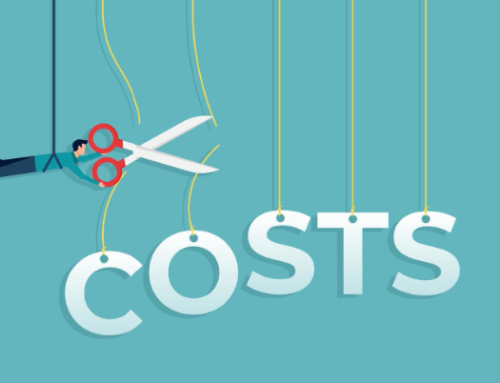
Global events, outside of our control, are leading to rapid and significant cost increases for all businesses, regardless of size. Whilst we may not be able to control all costs, we should be looking at what can be done in-house to reduce the impact of these events.
For many SMEs, the rising cost of labour in 2026 has reached a tipping point where the “cost-per-human-hour” often exceeds the cost of sophisticated automation. Minimum wage hikes and mandatory pension contributions have compressed profit margins, particularly in the service and manufacturing sectors.
To maintain viability, some businesses are adopting a “Technology First, Hiring Second” philosophy. This doesn’t necessarily mean mass layoffs; rather, it manifests as Headcount Suppression. Instead of hiring a third administrative assistant, an SME might deploy an AI agent to handle scheduling, invoicing, and basic customer queries.
By automating repetitive, low-value tasks, firms can reallocate their limited payroll budget toward a smaller number of high-skilled “super-users” who manage these systems. This shift transforms the traditional SME structure from a labour-heavy pyramid into a leaner, tech-enabled operation that can scale revenue without a linear increase in employee-related overhead.
To calculate if a software investment is worth it compared to a new hire, use this standard ROI formula:
(Hours Saved x Hourly Rate) – Cost of Investment) × 100 /Cost of Investment
Taking an action such as this is by no means to underestimate the value of people in your organization – no technology can replace good people, but it can help your business through these uncertain times. For that, your employees will thank you.